Few experiences are as terrifying as watching your newborn being rushed to the Neonatal Intensive Care Unit (NICU). Instead of holding your baby in a quiet recovery room, you are left in a hospital bed trying to make sense of a sudden medical crisis.
If your child suffered oxygen deprivation during delivery, doctors likely mentioned a diagnosis of Hypoxic-Ischemic Encephalopathy (HIE) and a time-sensitive treatment called cooling therapy. This sudden shift from a joyful birth to a medical emergency leaves parents desperate for clear answers.
Therapeutic hypothermia, commonly known as cooling therapy, is the gold-standard treatment for newborns diagnosed with HIE or birth asphyxia. The science behind this treatment is well-established. As the American Academy of Pediatrics notes, Therapeutic hypothermia provided within 6 hours of birth decreases mortality and improves survival without major disability.
While this treatment is highly effective at preventing permanent brain damage, it is a race against the clock. The success of cooling therapy strictly depends on an inflexible six-hour window.
The Race Against Time: Why the First 6 Hours Are Critical
The six-hour window exists because of how brain damage develops after a hypoxic event. When a baby experiences oxygen deprivation, the brain does not sustain all of its damage at once. Instead, there is a brief biological gap between the initial trauma and a secondary wave of cellular death.
Medical professionals have exactly six hours to intervene before this secondary phase becomes irreversible. If doctors start cooling therapy within this narrow timeframe, they can effectively pause the brain’s toxic cascade.
When medical teams miss this deadline, the biological consequences are often devastating. Without the protective benefits of hypothermia, the secondary brain injury progresses rapidly. This preventable cell death frequently results in permanent conditions like Cerebral Palsy (CP), severe cognitive impairments, and lifelong motor deficits.
Unfortunately, missing this window is frequently a result of medical negligence. Obstetricians may fail to order a timely emergency C-section, or NICU staff might miss clear signs of oxygen deprivation immediately after birth.
Therapeutic hypothermia is highly effective, but it is strictly time-sensitive; missing the six-hour window allows secondary brain damage to become permanent. When a hospital’s failure to recognize fetal distress or transfer a baby in time leads to irreversible harm, families often consult dedicated child injury attorneys to help secure the resources required for their child’s lifetime care.
Decoding the Diagnosis: What is HIE?
Medical jargon can feel like a foreign language when you are already overwhelmed. To understand why cooling therapy works, you first need to know exactly what is happening inside your baby’s brain.
Hypoxic-Ischemic Encephalopathy (HIE) is a specific type of brain dysfunction. We can break the term down simply: “Hypoxic” means a lack of oxygen. “Ischemic” means a lack of blood flow. “Encephalopathy” refers to a brain disorder or injury.
This initial hypoxic event typically occurs during a traumatic labor and delivery. Common causes include umbilical cord complications, uterine rupture, or a doctor delaying a necessary emergency C-section while the baby is in distress.
HIE does not cause a single, isolated injury. Instead, it triggers two distinct phases of brain damage. Understanding the difference between these two phases highlights exactly why medical timing is everything.
| Brain Injury Phase | Timing | What Happens Biologically |
|---|---|---|
| Phase 1: Primary Injury | During labor and delivery | The initial lack of oxygen and blood flow causes immediate cell damage and energy depletion in the brain. |
| Phase 2: Reperfusion Injury | 6 to 15 hours after birth | Normal blood flow returns to the brain, triggering a toxic release of chemicals and severe inflammation, causing mass cellular death. |
How Therapeutic Hypothermia Protects the Brain
Cooling therapy works by putting the newborn’s brain into a state of protective hibernation. By lowering the baby’s body temperature, doctors significantly slow down the child’s metabolic rate.
This slowed metabolism acts like a pause button on the brain’s toxic cellular cascade. It stops the inflammation and chemical release that define the dangerous second phase of an HIE injury. By holding the brain in this cooled state, damaged cells have a chance to recover rather than dying off completely.
Parents should feel reassured knowing this is a well-established standard of care, not an experimental procedure. Data shows that the rate of cooling therapy utilization increased by 66% between 2012 and 2021 in modern neonatal intensive care units. Doctors know this treatment works, and they expect hospitals to provide it promptly.
Seeing your newborn undergo this treatment is intimidating. Understanding the specific steps of the protocol can help demystify the NICU environment and prepare you for what comes next.
Inside the 72-Hour NICU Protocol
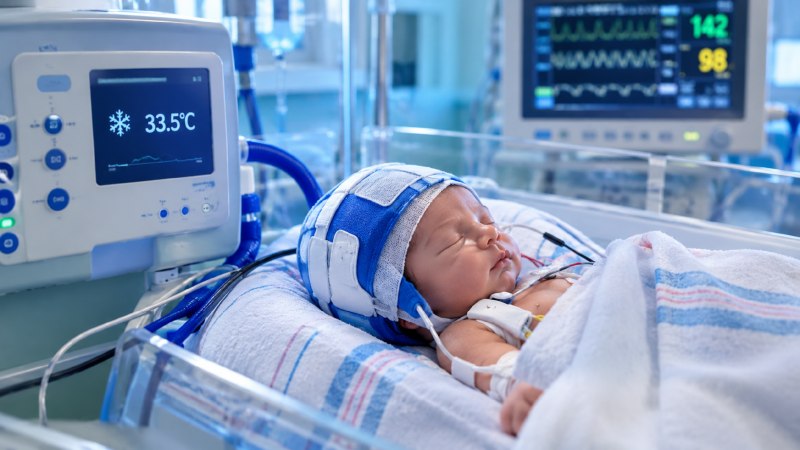
When a baby qualifies for therapeutic hypothermia, the NICU team uses specialized equipment to carefully control the child’s body temperature. Nurses place the infant on a cooling blanket or use a specialized cooling cap that circulates fluid to draw heat away from the body.
The temperature targets are incredibly precise. The cooling system lowers the child’s body temperature to 91.4°F to 95°F (33°C to 35°C) for up to 72 hours.
During these 72 hours, your baby will undergo intense monitoring. The medical team will use an Electroencephalogram (EEG) machine to watch for silent seizures, which are common in babies with HIE. You will see numerous wires attached to your baby’s head, along with heart monitors and breathing tubes to keep them stable.
| Protocol Stage | Duration | Medical Focus |
|---|---|---|
| Initiation | Hours 0 to 6 | Rapidly identifying HIE and lowering the body temperature to the target range before secondary injury begins. |
| Maintenance | Hours 6 to 72 | Holding the temperature steady between 91.4°F and 95°F while monitoring brain waves and vitals. |
| Rewarming | Hours 72 to 84+ | Slowly raising the body temperature by a fraction of a degree per hour to prevent seizures and sudden blood pressure changes. |
Once the 72 hours are complete, the slow rewarming phase begins. Nurses carefully raise the baby’s temperature over the course of 12 to 14 hours. Only after the baby is fully rewarmed can doctors conduct an MRI to assess the brain and discuss long-term prognosis with the parents.
The Danger of Inter-Hospital Transfer Delays
One of the most common reasons a newborn misses the six-hour cooling window involves hospital transfer delays. Not all hospitals are equipped to handle severe neonatal emergencies.
Many lower-level maternity wards (Level I or II community hospitals) lack the specialized cooling blankets and advanced monitoring equipment required to perform therapeutic hypothermia. When a baby is born with HIE at one of these facilities, doctors must immediately transfer the distressed newborn to a Level III or IV tertiary NICU.
This relies heavily on the delivering doctor’s ability to recognize the severity of the baby’s condition right away. Delayed decision-making during the immediate postpartum period eats directly into the rigid 6-hour window. If a medical team waits hours to arrange transport, the baby will arrive at the specialized NICU too late, directly causing preventable brain damage.
Seeking Accountability When the Standard of Care Fails
When doctors fail to adhere to these time-critical standards of care, they rob the infant of the only treatment capable of halting brain damage. A missed diagnosis or delayed hospital transfer has lifelong consequences for both the child and the family.
The financial reality of catastrophic childhood injuries is immense. A child who develops Cerebral Palsy due to untreated HIE will likely require decades of specialized medical care. Families face mounting costs for mobility equipment, speech and physical therapy, special education resources, and necessary home modifications.
A comprehensive legal investigation can uncover exactly why a baby was denied timely treatment. By auditing fetal monitoring strips, delivery notes, and NICU transport timelines, experts can pinpoint the exact moments medical staff failed to act.
Pursuing legal action does more than secure a financial safety net for a child’s future. It forces hospital systems to fix broken protocols, implement better training, and protect future families from suffering the same tragedy.
Conclusion
Therapeutic hypothermia is a miraculous medical intervention that saves lives and preserves brain function. However, its success remains entirely bound to the strict six-hour window following birth. Once that time expires, the opportunity to prevent lifelong neurological damage closes forever.
As a parent, you have the right to demand clear answers about your delivery timeline. You deserve to know why certain medical decisions were made, why a transfer was delayed, or why cooling therapy was not initiated in time.
Navigating an HIE diagnosis is an incredibly heavy burden. Families should never have to carry the emotional and financial weight of medical negligence alone. By seeking both the specialized medical care and the dedicated legal support you need, you can secure your child’s quality of life and ensure they receive the comprehensive care they deserve.