Key Takeaways
- Marine demolition involves more than breaking concrete or cutting steel. It requires coordination with vessels, water conditions, utilities, workers, and nearby assets.
- Early surveys above and below the waterline help reveal hidden connections, deterioration, debris, and seabed conditions that may affect the removal sequence.
- Removal methods should be selected based on access, structural condition, lifting capacity, environmental controls, and the site’s future use.
- Clear exclusion zones, daily communication, and practical stop-work criteria help protect active terminal operations.
- Debris, slurry, sediment, coatings, and waste controls should be designed before field work begins.
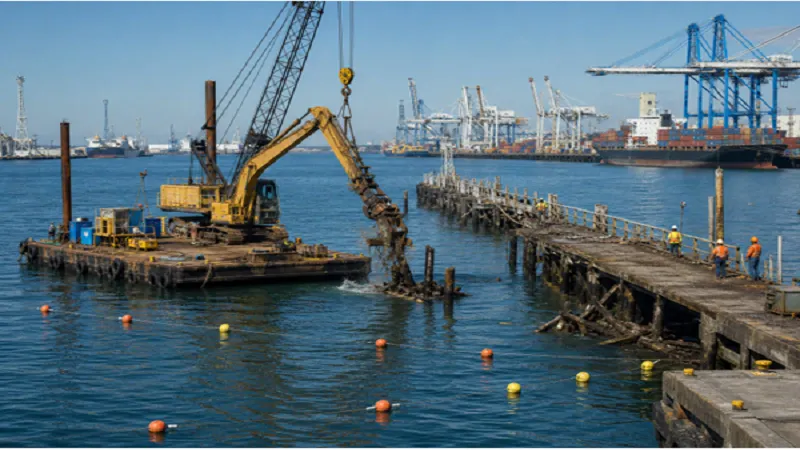
Removing or modifying aging piers, wharves, piles, dolphins, training walls, and berth components is rarely a simple demolition assignment. Effective port removal planning must account for structural stability, vessel movements, tides, underwater conditions, utilities, environmental obligations, and the need to maintain a working waterfront.
Whether the goal is to clear a navigation constraint, replace a deteriorated berth, or prepare for terminal expansion, the safest projects treat removal as a coordinated marine operation. The work plan should define who controls the site, how conditions will be checked, when work must stop, and how the area will be returned to safe use.
Why Port Infrastructure Removal Requires Careful Planning
Ports are complex workplaces where marine traffic, cargo handling, trucking, cranes, maintenance crews, and contractors can occupy the same limited area. A removal project can affect berth availability, maneuvering room for vessels, emergency access, loading schedules, and navigation routes, even when the physical scope appears small.
Conditions can also change quickly. Tides and currents influence barge positioning and diving work. Weather can reduce visibility or make lifting unsafe. Aging structures may not behave as original drawings suggest, particularly when corrosion, impact damage, settlement, or undocumented repairs are present. A sound plan identifies these uncertainties early and establishes decision points for reassessment.
Start With a Complete Site Assessment
Before choosing tools or mobilizing equipment, project teams should combine records review with field verification. Older plans are valuable, but they should not be treated as a substitute for current observations.
- Review available drawings, inspection reports, maintenance records, and previous repair information.
- Inspect accessible structural elements and identify load paths, weak areas, temporary supports, and likely separation points.
- Use diver inspections, sonar, probing, or other appropriate methods to examine submerged piles, footings, debris, and seabed conditions.
- Confirm water depth, tides, currents, clearance limits, and barge or crane access.
- Locate electrical systems, fuel lines, pipelines, drainage, communications equipment, and other utilities before cutting begins.
- Identify vessel routes, restricted areas, navigation aids, and operational windows that affect the work zone.
- Assess potential hazardous materials, coatings, contaminated sediment, or legacy waste that may require specialized handling.
Choose the Right Removal Method
No single method fits every marine structure. The preferred approach should reflect the component being removed, the ability to isolate the work area, lifting limits, nearby assets, and the controls required to manage debris and vibration.
- Mechanical removal: Excavators, breakers, grapples, and similar equipment can be useful where access is adequate, but the work may create larger debris, noise, and vibration.
- Precision cutting: Controlled cutting can create manageable sections where crews need to protect nearby structures or control the break line.
- Underwater cutting: This approach may be needed for piles, columns, caissons, or other elements that extend below the waterline.
- Crane-assisted section removal: Cutting components into planned lift sizes can allow crews to remove them by crane, barge, or shore-based equipment.
- Phased demolition: Dividing the work into smaller zones can preserve access to portions of a terminal while removal progresses.
Protect Active Port Operations
Operational coordination should be part of the daily work routine, not only addressed during preconstruction meetings. Vessel schedules, pilotage needs, cargo movements, tidal windows, and emergency routes should inform the sequence of work.
Useful controls include clearly marked exclusion zones, designated barge positions, traffic management plans, daily coordination calls, and authority to stop work when visibility, weather, vessel traffic, or equipment conditions change. A recent Fraser Surrey Terminal upgrade illustrates how targeted removal can improve access: the project removed a legacy in-river training wall and approximately 1,400 piles to reduce a vessel-access bottleneck without building an entirely new terminal. This supported broader terminal-capacity goals while retaining the value of existing infrastructure.
Build Safety Into Every Phase
Safety planning should continue from the first survey through final cleanup. Job hazard analyses should address falls, dropped loads, pinch points, unstable structures, diving operations, confined spaces, electrical exposure, vessel interaction, and changing water conditions.
- Verify worker qualifications, site-specific training, and the responsibilities of supervisors, operators, riggers, and dive teams.
- Inspect lifting points, temporary bracing, work platforms, rigging, cutting equipment, and communications systems before use.
- Maintain reliable communication between surface crews, vessel operators, divers, crane operators, and port representatives.
- Prepare emergency procedures for injuries, equipment failure, unexpected movement, spills, severe weather, and evacuation.
Control Noise, Vibration, and Debris
Uncontrolled debris can become a navigation hazard, obstruct intakes, damage equipment, or complicate final clearance verification. Vibration may also affect adjacent piles, slabs, utilities, or structures that remain in service. Planning section sizes, lift paths, containment locations, and disposal routes before removal begins helps reduce those risks.
Containment should address concrete fragments, steel offcuts, slurry, sediment, coatings, and floatable material. Controls may include catch platforms, screens, turbidity measures where required, covered staging areas, and routine inspections. Material should be collected promptly, segregated when practicable, and sent for reuse, recycling, treatment, or disposal in accordance with applicable project requirements.
Plan for Environmental Protection
Environmental protection is most effective when it is incorporated into the means and methods, rather than added after equipment arrives. Teams should determine what may enter the water, how releases will be prevented or contained, what monitoring is required, and whether seasonal restrictions apply to the site.
Questions should cover fish and wildlife windows, sediment disturbance, water-quality monitoring, waste characterization, post-removal inspection, and restoration needs. The Coast Guard’s August 2026 Cooper River salvage response shows the value of coordinated controls: after a crane entered the water, agencies, port stakeholders, and a salvage contractor worked to remove the submerged crane from the waterway, minimize environmental impacts, and restore normal vessel traffic. This also allowed the safety zone to be rescinded once the pollution threat was eliminated.
Use a Clear Removal Sequence
- Survey the site: Confirm structural, underwater, environmental, and operational conditions.
- Define the work zone by establishing navigation limits, access routes, lift areas, containment locations, and emergency paths.
- Select the method: Match the tools and sequence to the structure, available access, and surrounding assets.
- Prepare controls: Install debris, slurry, sediment, and waste management measures before removal begins.
- Remove controlled sections: Keep each piece within the approved limits for lifting, transport, and disposal.
- Inspect after each phase: Check remaining structures, seabed conditions, and nearby operational assets.
- Verify final conditions: Confirm the area is safe for vessels, workers, and any future construction activity.
Common Questions About Port Infrastructure Removal
Can port demolition take place while the facility remains open?
Often, yes. Continued operations may require restricted zones, phased work, temporary access changes, carefully timed vessel movements, or short closures during higher-risk activities such as major lifts.
When is underwater cutting needed?
Underwater cutting may be appropriate when components extend below the waterline or when removal from above would create unacceptable access, vibration, or structural-control challenges.
How far in advance should planning begin?
Planning should begin as soon as the scope is known because surveys, permits, utility verification, environmental review, marine coordination, and equipment selection may take longer than the physical removal work.
Final Checklist for Project Managers
- Has the structure been assessed above and below the waterline?
- Are vessel traffic, terminal operations, and tidal constraints included in the schedule?
- Have utilities, hidden connections, and hazardous materials been investigated?
- Do all contractors and operators understand the removal sequence?
- Are lifting, debris, slurry, waste, and emergency plans ready for use?
- Will the completed area be inspected before normal operations resume?
Conclusion
Port infrastructure removal is safest when structural assessment, controlled demolition, marine coordination, worker protection, and environmental planning are managed as a single, integrated effort. With a clear sequence and practical controls, project teams can remove aging assets while maintaining a safer, more reliable working waterfront.