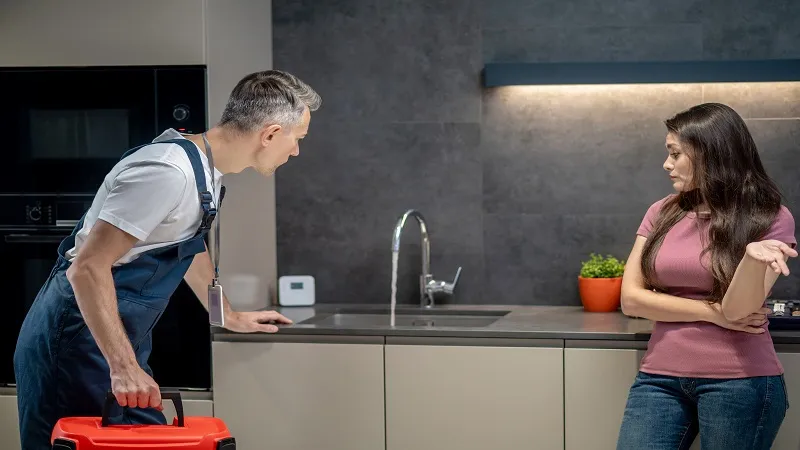
When a plumbing crisis strikes, homeowners often find themselves in a rush to find a reliable professional who can quickly resolve their issues. A staggering 88 percent of Americans can’t handle an unexpected $2,000 home repair bill, making the choice of a cost-effective plumber an important financial decision. This article provides homeowners with a comprehensive set of questions to consider when hiring a plumber.
Knowing what to ask can prevent future mishaps, ensure quality workmanship, and save money. Below, we’ll discuss the crucial questions that could make the difference between a successful repair and a plumbing nightmare.
Assessing Qualifications: Questions to Determine a Plumber’s Expertise
When assessing a plumber’s qualifications, start by asking about their level of experience and areas of specialization. A plumber with several years in the business likely has a proven track record and a better understanding of a wide range of plumbing issues.
Check their qualifications, such as certifications from recognized plumbing institutions or training programs. These often indicate that a plumber has received formal education and training, staying updated with the latest industry practices and standards. A professional with advanced certification may be more adept at handling complex plumbing systems and innovations.
Lastly, request references from past clients to get firsthand accounts of their workmanship and reliability. Quality plumbers will often have a list of satisfied customers who can attest to the plumber’s ability to deliver satisfactory services. If you’re searching for a plumber near me, considering these factors will be crucial in your decision-making process.
Verifying Legitimacy: Inquiries About Licensing and Insurance
Licensing is a foundational aspect of a plumber’s credibility. Most regions require plumbers to be licensed, ensuring they are legally qualified to conduct plumbing work. Ask to see their current license to verify that they are compliant with local regulations and are not operating illegally.
Insurance is equally critical. Plumbers should have both liability insurance and worker’s compensation. The former covers any damage that occurs as a result of their work, while the latter protects you from being liable if a plumber is injured while working on your property. Always request proof of insurance to safeguard against unexpected liabilities.
As a concrete step, check with your local trade commission or consumer protection agency to confirm the plumber’s licensing status. This proactive measure can prevent potential legal issues and protect your investment in your home’s plumbing needs. Better Business Bureau could be a starting point.
Understanding Costs: What to Ask About Estimates, Rates, and Fees
A clear understanding of costs is essential when hiring a plumber. Begin by asking if they provide free estimates, and if not, how much they charge for a quote. Estimates should be detailed, breaking down labor costs, parts, and any potential additional fees.
Inquire about their hourly rates, minimum charges, and how they handle overtime or work during non-business hours. Transparency in billing practices can help prevent disputes over the final bill. Details about any guarantees or warranties on the parts used and labor performed can give you peace of mind.
Don’t hesitate to compare estimates from different plumbers. However, remember that the cheapest option isn’t always the best. Weigh the cost against the plumber’s experience, reputation, and the quality of materials they plan to use.
Evaluating Availability and Support: What to Know About Emergency Services and Customer Care
Plumbing emergencies rarely happen at convenient times, making a plumber’s availability a crucial factor. Ask potential plumbers about their emergency services policy and response time. Some may offer 24/7 emergency services, which can be reassuring.
Good customer service often reflects the overall professionalism of a plumbing business. Observe how they respond to initial inquiries – whether they are prompt, clear, and courteous. This behavior usually mirrors their attitude towards service delivery and customer satisfaction.
Finally, determine how they handle follow-up services and support post-job completion. Understanding their procedure for resolving issues that may arise after the repair can provide an indication of their commitment to quality service and long-term customer satisfaction. Angie’s List might help learn more about local plumbers’ reputations.
Overall, hiring a plumber requires thorough vetting to ensure that you’re entrusting your home’s plumbing system to a qualified and reliable professional. By asking about their qualifications, confirming their legitimacy, understanding their costs, and evaluating their customer care standards, you can significantly improve the chances of a satisfactory outcome. With the right questions, homeowners can avoid unnecessary expenses, enjoy lasting results, and establish a trustworthy relationship with their chosen plumber.