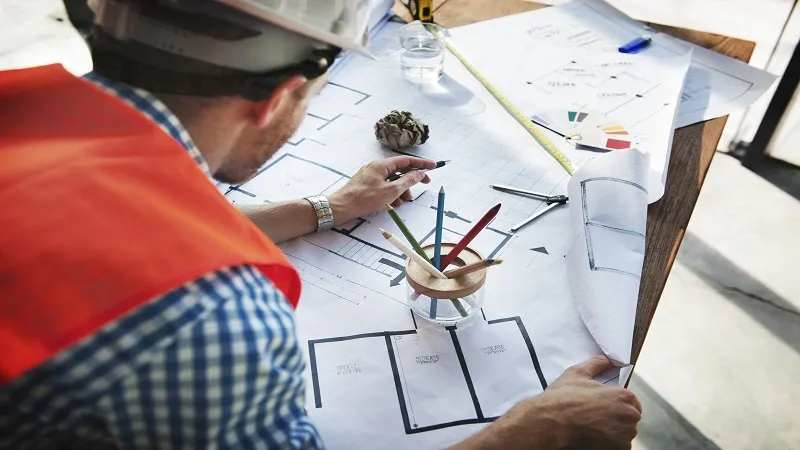
Managing risks in construction is a top priority for owners and stakeholders who want their projects finished on time, on budget, and to exacting quality standards. While traditional project delivery often splits design and construction into separate contracts, opening the door for miscommunication and disputes, the design-build approach brings all entities together for better project outcomes. This integrated method has risen in popularity thanks to its reputation for delivering efficiency, accountability, and streamlined communication. To learn more about how this approach can benefit your next project, consider how it contrasts with traditional delivery methods and why so many companies are making the switch.
Construction projects are notorious for change orders, delays, and cost overruns when there is no unified vision or coordinated execution. By combining design and construction into one cohesive process led by a single entity, design-build offers a practical solution for minimizing risk and preventing the preventable. Owners are relieved of managing multiple contracts and instead work with a single responsible partner committed to meeting the project’s objectives. This piece explores why design-build stands apart and how it transforms risk management in the building industry.
The approach’s flexibility and responsiveness also fuel the shift toward integrated project delivery. With design-build, decisions are made quickly because all key players work together from the outset, rather than waiting for sequential handoffs between design firms and contractors.
Fewer disputes and an accelerated project pace translate into projects that are more likely to stay within scope, schedule, and budget parameters. Industry reports and major media coverage, such as that in Building Design + Construction, highlight the substantial growth and proven track record of the design-build model, supporting its effectiveness in reducing risks across various market sectors.
Understanding the Design-Build Method
In a design-build project, a single contract covers both the design and construction phases, assigning clear accountability to a single entity, the design-builder. This unified approach stands in contrast to the design-bid-build process, where owners must first hire a designer and then conduct a second bid to select a contractor, often leading to adversarial relationships and communication breakdowns. The design-build model encourages fluid communication, leading to a more integrated project team and fewer surprises along the way.
The design-builder, whether a single company or a partnership, manages all workflows, engaging architects, engineers, and construction professionals as part of a coordinated team. The owner, meanwhile, benefits from streamlined updates, simplified decision-making, and a built-in process for proactively addressing potential problems before they grow. This results in a more predictable and manageable construction process from conception to completion.
Benefits of Design-Build in Risk Reduction
Enhanced Collaboration and Communication
With the design-build method, collaboration begins on day one. From early planning through final delivery, design and construction professionals work hand in hand to align project goals, anticipate challenges, and ensure constructability. This continuous collaboration reduces information gaps that can lead to costly errors or rework and ensures that all stakeholders are working toward the same objective.
Fewer Change Orders
Change orders can derail a project’s budget and schedule. Under traditional delivery, the separation of design and construction often leads to missing details or overlooked constructability concerns, which are only discovered after breaking ground. With the design-build approach, constructability is reviewed throughout the design phase and into construction, resulting in far fewer change orders. Problems are solved in real time, with all necessary expertise at the table.
Accelerated Project Schedules
The overlap of design and construction activities within the design-build model delivers substantial time savings. Since construction work can begin while design details are still being finalized, projects often shave weeks or months off their schedules compared to traditional approaches. This fast-tracking is especially valuable for projects with ambitious deadlines or when getting to market quickly has strategic value, such as in healthcare or industrial settings.
Single-Point Responsibility
One of the most significant advantages of design-build is the clarity it provides with a single point of responsibility. There is no ambiguity over who is accountable when design questions or construction issues arise. The design-builder is contractually bound to deliver the project in accordance with the agreed terms, thereby greatly reducing the owner’s administrative burden and legal exposure. This concentrated responsibility also allows for more consistent quality management throughout every phase.
Real-World Examples of Design-Build Success
The value of design-build in mitigating risk is well documented through high-profile examples and industry studies. According to the Design-Build Institute of America, design-build projects are projected to account for nearly half of total U.S. construction spending by 2028, showcasing the growing preference for its integrated risk-reduction approach. Case in point, solar energy giant Qcells turned to a design-build team to complete nearly 4 million square feet of manufacturing space. The move enabled swift delivery, cost certainty, and quick transition to operational status, underscoring why large owners are turning to this model in competitive industries.
Research by academic institutions and industry groups consistently shows that design-build projects outperform their traditional counterparts on key metrics such as speed, cost, and quality. A study published by the American Council of Engineering Companies (ACEC) details improved outcomes, including reduced claims, lower construction costs, and higher owner satisfaction, among owners who use integrated delivery methods.
Conclusion
Incorporating design and construction under one contract reduces risk for owners by fostering continuous collaboration, reducing the number of costly change orders, expediting schedules, and concentrating accountability in a single reliable partner. Not only has design-build significantly reduced the potential for disputes and delays, but it also helps deliver complex projects successfully, regardless of size or sector. As the construction industry continues to evolve, adopting the design-build method is an effective strategy for those seeking predictable, high-quality outcomes while mitigating maximum risk.